
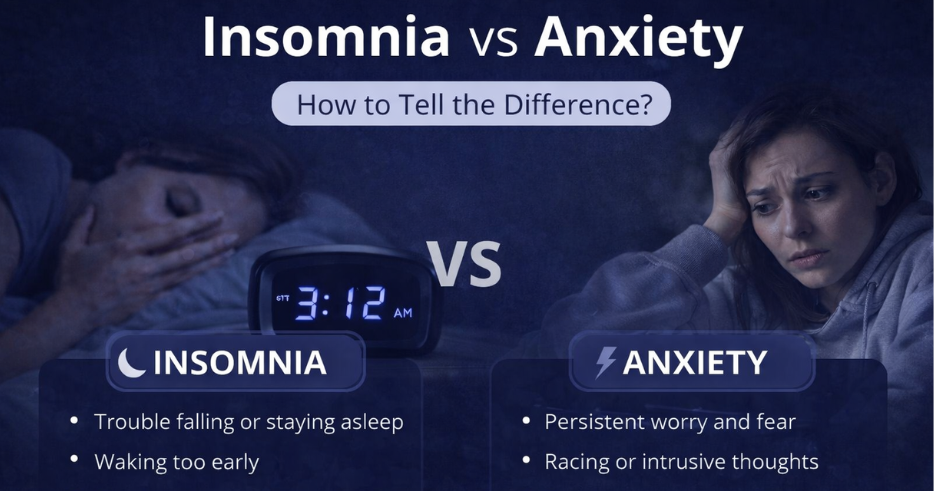
Difficulty sleeping and constant worry often go hand in hand, making it hard to tell whether insomnia or anxiety is the real issue. While these two conditions are closely connected, they are not the same—and understanding the difference is essential for effective treatment.
This guide explains insomnia vs anxiety, how they overlap, key symptoms that separate them, and when both may be present at the same time.
Understanding Insomnia
Insomnia is a sleep disorder characterized by persistent difficulty falling asleep, staying asleep, or waking too early despite adequate opportunity for rest. People with insomnia often feel tired during the day, yet remain unable to sleep at night.
Insomnia can be:
- Short-term (acute), lasting days or weeks due to stress or life changes
- Long-term (chronic), occurring at least three nights per week for three months or more
Common insomnia symptoms include prolonged sleep onset, frequent nighttime awakenings, non-restorative sleep, and daytime fatigue.
Understanding Anxiety
Anxiety is a mental health condition involving excessive worry, fear, or nervousness that is difficult to control. Unlike normal stress, anxiety persists even when there is no immediate threat.
Anxiety disorders can present as:
- Generalized Anxiety Disorder (GAD)
- Panic disorder
- Social anxiety
- Situational or stress-related anxiety
Common anxiety symptoms include racing thoughts, muscle tension, rapid heartbeat, restlessness, irritability, and difficulty concentrating.
Why Insomnia and Anxiety Are Often Confused
Insomnia and anxiety share many overlapping symptoms, which is why they are frequently mistaken for one another. Both can cause:
- Trouble sleeping
- Fatigue
- Difficulty concentrating
- Mood changes
- Increased stress sensitivity
In many cases, one condition can trigger or worsen the other, creating a cycle that is hard to break without proper diagnosis.
Key Differences Between Insomnia and Anxiety
Primary Symptom Focus
Insomnia is primarily about sleep disruption, while anxiety is centered on persistent mental and physical worry.
If sleep problems occur only at night and mood is relatively stable during the day, insomnia may be the primary issue. If worry, fear, or tension persists throughout the day and interferes with daily activities, anxiety is more likely.
Timing of Symptoms
Insomnia symptoms are most severe at night, especially when trying to fall asleep. Anxiety symptoms occur both day and night, often intensifying during quiet moments.
People with anxiety may lie awake worrying, while those with insomnia may feel alert or restless even without anxious thoughts.
Thought Patterns
Anxiety is typically associated with racing, intrusive thoughts about future events, health, finances, or personal safety. Insomnia may involve frustration about not sleeping, but not necessarily broader worry patterns.
If your mind is active with “what if” scenarios, anxiety is likely playing a role.
Physical Symptoms
Anxiety often produces noticeable physical symptoms such as:
- Chest tightness
- Rapid heartbeat
- Shortness of breath
- Muscle tension
- Gastrointestinal discomfort
Insomnia-related physical symptoms are more commonly fatigue-related, such as headaches, low energy, and reduced focus.
When Insomnia Is Caused by Anxiety
Anxiety is one of the most common causes of chronic insomnia. Ongoing worry keeps the nervous system in a heightened state of alertness, making it difficult to relax enough for sleep.
In this case:
- Anxiety symptoms appear first
- Sleep problems develop as a secondary issue
- Treating anxiety improves sleep
This pattern is common in people with generalized anxiety disorder or panic disorder.
When Insomnia Exists Without Anxiety
Not all insomnia is anxiety-related. Insomnia can also be caused by:
- Poor sleep habits
- Irregular schedules
- Excessive caffeine or screen use
- Medical conditions
- Medications
In these cases, individuals may feel calm mentally but still unable to sleep due to disrupted sleep rhythms or conditioned arousal.
Can You Have Both Insomnia and Anxiety?
Yes—and this is very common. Many people experience co-occurring insomnia and anxiety, where each condition reinforces the other.
Anxiety increases nighttime alertness, while sleep deprivation worsens emotional regulation, making anxiety more intense. This cycle can persist without targeted treatment.
How Diagnosis Works
Healthcare providers typically assess:
- Sleep patterns and duration
- Daytime anxiety symptoms
- Stress levels and mental health history
- Medication and lifestyle factors
Sleep diaries, questionnaires, and clinical interviews help determine whether insomnia, anxiety, or both are present.
Treatment Differences
Treating Insomnia
Effective insomnia treatments include:
- Cognitive Behavioral Therapy for Insomnia (CBT-I)
- Sleep schedule regulation
- Stimulus control techniques
- Short-term sleep medications (when appropriate)
CBT-I is considered the gold standard for long-term insomnia relief.
Treating Anxiety
Anxiety treatment often includes:
- Cognitive Behavioral Therapy (CBT)
- Stress management techniques
- Mindfulness and relaxation strategies
- Medications such as SSRIs or short-term anxiolytics
Treating anxiety often leads to significant improvements in sleep quality.
When to Seek Professional Help
You should consider professional evaluation if:
- Sleep problems last longer than three weeks
- Anxiety interferes with daily life
- Fatigue affects work or relationships
- Symptoms worsen despite lifestyle changes
Early treatment leads to better outcomes and prevents long-term complications.
Final Thoughts
Insomnia and anxiety are closely linked but distinct conditions. Insomnia primarily affects sleep, while anxiety impacts thoughts, emotions, and physical tension throughout the day. Many people experience both at the same time, making accurate diagnosis essential.
Understanding the difference between insomnia and anxiety allows for more effective treatment, better sleep, and improved overall well-being.

Leave a Reply